A VPN is a network-path tool, not an anonymity guarantee. It can hide traffic from the local network and mask your IP address from a website, but the VPN provider, the destination and other parties may still observe connection information. It also does not remove copyright or access restrictions.
FAST-VID has two connections to consider: your browser to FAST-VID, and the worker to the source media. This guide explains what changes when you enable a VPN and where its limits matter.
What a VPN changes
When a VPN is active on your device, traffic that uses the tunnel goes to the VPN server and then to the destination. The local network sees an encrypted connection to the VPN rather than your direct traffic to each site. The destination generally sees the VPN server's IP address instead of your home or mobile IP.
This can reduce exposure on an untrusted local network and can hide your apparent location from a site. It does not encrypt traffic after the VPN server forwards it unless the destination itself uses HTTPS, and it does not stop the destination from logging your visit.
The VPN provider becomes part of your trust chain. It can see connection metadata and may be required to retain or disclose information depending on its policies and jurisdiction. A VPN you do not trust can be worse than no VPN.
What a VPN does not do
A VPN does not make you anonymous. Websites can use accounts, cookies, browser fingerprints, payment details, timing and other signals to recognize a returning visitor. It does not defeat all tracking, and it does not guarantee that DNS or other traffic uses the tunnel.
It does not make private, login-only, age-restricted, members-only or DRM-protected content public. It also does not change copyright obligations or a platform's terms. Using a VPN to evade a block may violate rules and does not make the underlying content authorized.
A VPN can introduce new problems: captchas, rate limits, blocked connections, slower downloads and regional restrictions on the VPN exit itself. Shared VPN IP addresses are often treated more suspiciously than residential addresses.
A VPN is one control, not a complete security plan. It does not replace updates, HTTPS or careful link checks.
IP addresses and connection metadata
A website can see the source IP address of the connection it receives. With a device VPN, FAST-VID may see the VPN exit address rather than your local ISP address. Without one, it may see your ordinary public address. The service still needs request metadata for routing, security and rate limiting.
The worker's outbound connection is separate. In the inspected implementation, the worker requires a configured egress proxy and has no direct-egress fallback. The source site sees the egress path used by the worker, not the browser's VPN tunnel.
So a VPN on your laptop can change how your browser reaches FAST-VID without changing how FAST-VID's worker reaches the source. The two paths should not be described as one. This is a functional distinction, not a promise that either path is anonymous.
Provider trust, logs and jurisdiction
Choose a VPN based on ownership, privacy policy, logging claims, jurisdiction and independent evidence, not only speed or price. A no-logs claim is a statement by the provider; evaluate whether the policy, audits and business model support it.
Free VPNs may fund themselves through advertising, data collection, limited servers or upsells. That does not make every free service malicious, but it changes the incentive to inspect. A VPN operated by your employer or school may be subject to organizational monitoring.
Check whether the VPN supports a kill switch, encrypted DNS and current protocols. Test for leaks on a trusted page if you rely on IP privacy. Keep the VPN app updated and remove it when you no longer need it.
How FAST-VID handles the two connections
Your browser connects to FAST-VID over HTTPS in the production configuration inspected. FAST-VID issues an anonymous first-party session and associates jobs and files with that session. A VPN can change the address FAST-VID sees, but it does not remove the need for a valid session or change the supported-content rules.
The worker fetches source media through its configured server-side egress proxy. It does not use your device's VPN, local DNS or home network. This design separates the public web request from the media fetch, but it does not make the source anonymous to the worker or the worker anonymous to the source.
FAST-VID does not provide a VPN, promise anonymity or guarantee access to restricted content. Use the service for supported public links and content you are authorized to save.
Practical guidance
If you use a VPN, choose one you trust, keep it updated and confirm that the traffic you care about actually uses the tunnel. Do not assume it fixes account security, malware or a deceptive download page. Use HTTPS, verify the site and keep the browser updated.
If a download fails only when the VPN is on, the exit IP may be blocked or rate-limited. Turning the VPN off is a troubleshooting step, not a guarantee that the source is safe or that access is authorized.
For a public-link downloader, the most useful privacy step is often to avoid supplying unnecessary account data. FAST-VID does not need your social-media password, cookies or browser profile.
| Question | VPN effect |
|---|---|
| Hides traffic from the local network? | Can, for traffic routed through the tunnel |
| Hides your IP from every site? | Only the sites that see the VPN exit address |
| Makes you anonymous? | No |
| Changes the worker's fetch route? | Not automatically; it is a separate server-side path |
| Grants access to restricted content? | No |
Frequently asked questions
Does a VPN make me anonymous?
No. It changes the apparent network path and IP for routed traffic, but accounts, cookies, browser characteristics and other signals can still identify you.
Does a VPN hide my traffic from my ISP?
It can hide the destinations and content of traffic that uses the tunnel, but the VPN provider and other parties may still see metadata.
Does a VPN change FAST-VID downloads?
Not automatically. The browser-to-FAST-VID connection and the worker-to-source connection are separate. The worker uses its configured server-side egress path.
Can a VPN bypass geo-restrictions?
It may change your apparent location, but services can block VPN exits, and using it to evade restrictions may violate terms or law. It does not make restricted content authorized.
Why do captchas appear when a VPN is on?
Shared VPN exit addresses may be associated with automated traffic or abuse. A site may respond with extra checks, rate limits or blocks.
Sources and references
- EFF: Choosing the VPN that is right for you
- CISA: Good Security Habits
- MDN: Transport Layer Security
- CISA: Best Practices for Using Public Wi-Fi
- FAST-VID: Video downloaders on public Wi-Fi
Try FAST-VID
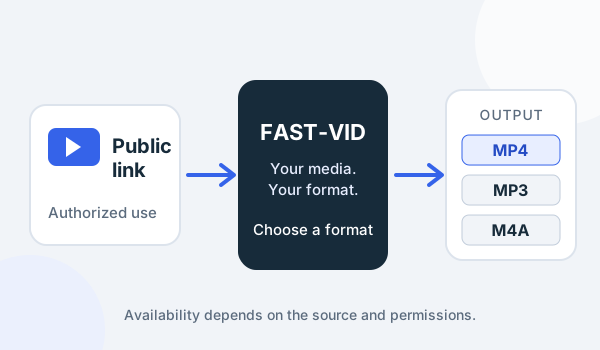
Open the FAST-VID downloader for a supported public link. A VPN is optional; it does not change the service's server-side fetch route or grant access to restricted content.